



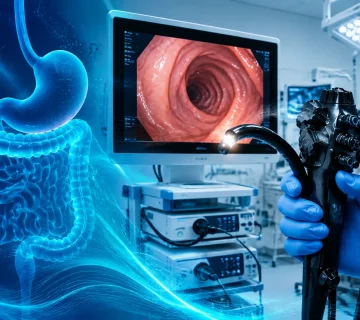
Gastrointestinal endoscopy has become one of the most important pillars of diagnosis, treatment and monitoring of gastrointestinal diseases in the past few decades. This field, which was initially mainly known as a diagnostic method, has today become a dynamic and evolving specialized field with the introduction of advanced technologies, high-resolution equipment, new imaging, minimally invasive treatment techniques and artificial intelligence-based tools.
In such circumstances, the development of endoscopic knowledge does not only depend on the advancement of equipment and technology, but also requires the existence of coherent scientific structures for education, research, development of standards and transfer of experiences among specialists. Medical scientific societies play a pivotal role in this path and act as a bridge between physicians, medical centers, universities and health policy-making institutions.
The role of scientific associations in promoting specialized education
One of the most important tasks of medical scientific societies is to provide a suitable platform for continuous education of members and to improve the scientific level of the medical community. In the field of gastrointestinal endoscopy, where scientific and technological changes occur at a rapid pace, periodic training and updating of doctors’ knowledge is of particular importance.
Scientific congresses, practical workshops, specialized training courses and retraining programs are among the activities that scientific societies carry out to transfer the latest scientific achievements. These programs provide a good opportunity for specialists to share their experiences in the field of new diagnostic methods, treatment techniques, management of complications and standards of care.
Establishing scientific standards and improving the quality of services
One of the most important roles of specialized societies is to participate in the development of scientific guidelines and standards. In gastrointestinal endoscopy, the quality of a procedure is not limited to its successful completion, but factors such as appropriate patient preparation, quality of mucosal observation, accurate recording of findings, infection control, patient safety, and follow-up of results are also of fundamental importance.
By reviewing existing evidence and utilizing the experiences of domestic and international experts, scientific societies can provide criteria for evaluating the quality of endoscopy services. Implementing these standards will reduce medical errors, increase patient safety, and bring medical centers closer to globally accepted standards.
Supporting scientific research and knowledge production
The development of any medical field is not possible without research and knowledge production. Scientific societies, by creating a network of researchers and experts, provide the basis for conducting applied studies and producing scientific articles.
In the field of endoscopy, numerous studies are being conducted in the field of early diagnosis of gastrointestinal cancers, new methods of lesion removal, the use of artificial intelligence in the diagnosis of precancerous lesions, and improving treatment methods.
Scientific societies can play an important role in increasing the country’s contribution to the production of medical science by supporting research projects, creating databases, encouraging multicenter collaborations, and connecting with international scientific centers.
Strengthening communication among specialists and transferring experience
One of the most valuable achievements of scientific societies is creating a space for interaction between specialists with different experiences. Many medical advances are the result of exchanging experience among physicians and discussing real challenges in clinical settings.
In the field of gastrointestinal endoscopy, dealing with complex conditions such as gastrointestinal bleeding, difficult lesions, strictures, complex polyps, and advanced treatment methods requires practical experience and careful decision-making. By creating communication opportunities between young and veteran specialists, societies help transfer practical knowledge and increase the capabilities of the next generation of physicians.
The role of societies in promoting community health
Although the main activity of scientific societies is focused on the medical community, the final effect of these activities is directly seen in the health of the community. Increasing the quality of endoscopy services, early diagnosis of diseases, and raising public awareness about the importance of screening for gastrointestinal diseases are all results of the scientific activities of these associations.
For example, scientific programs related to colon cancer screening can play an important role in identifying patients in the early stages of the disease and reducing mortality rates.
The Future of Endoscopy and the Role of Scientific Associations
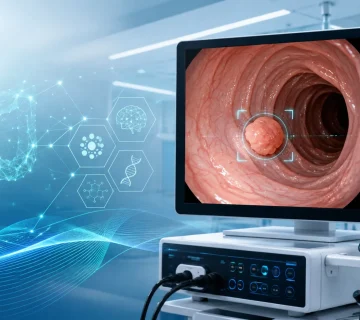
The future of gastrointestinal endoscopy is tied to technologies such as artificial intelligence, advanced imaging, decision-making support systems, and minimally invasive treatment methods. In this direction, scientific medical associations have the duty to accompany these developments and provide the basis for proper training and standardized use of new technologies.
Developing international cooperation, supporting innovative research, and training capable specialists are among the most important measures that can enhance the position of gastrointestinal endoscopy in the health system.
Conclusion
Medical scientific societies are the mainstay of knowledge development in specialized fields. In the field of gastrointestinal endoscopy, these societies play a decisive role in improving the quality of medical services by focusing on education, research, standardization, experience transfer, and support for innovation.
Investing in the scientific activities of societies will not only advance medical knowledge, but will ultimately lead to the provision of safer, more accurate, and more effective services to patients.

Share your opinion