


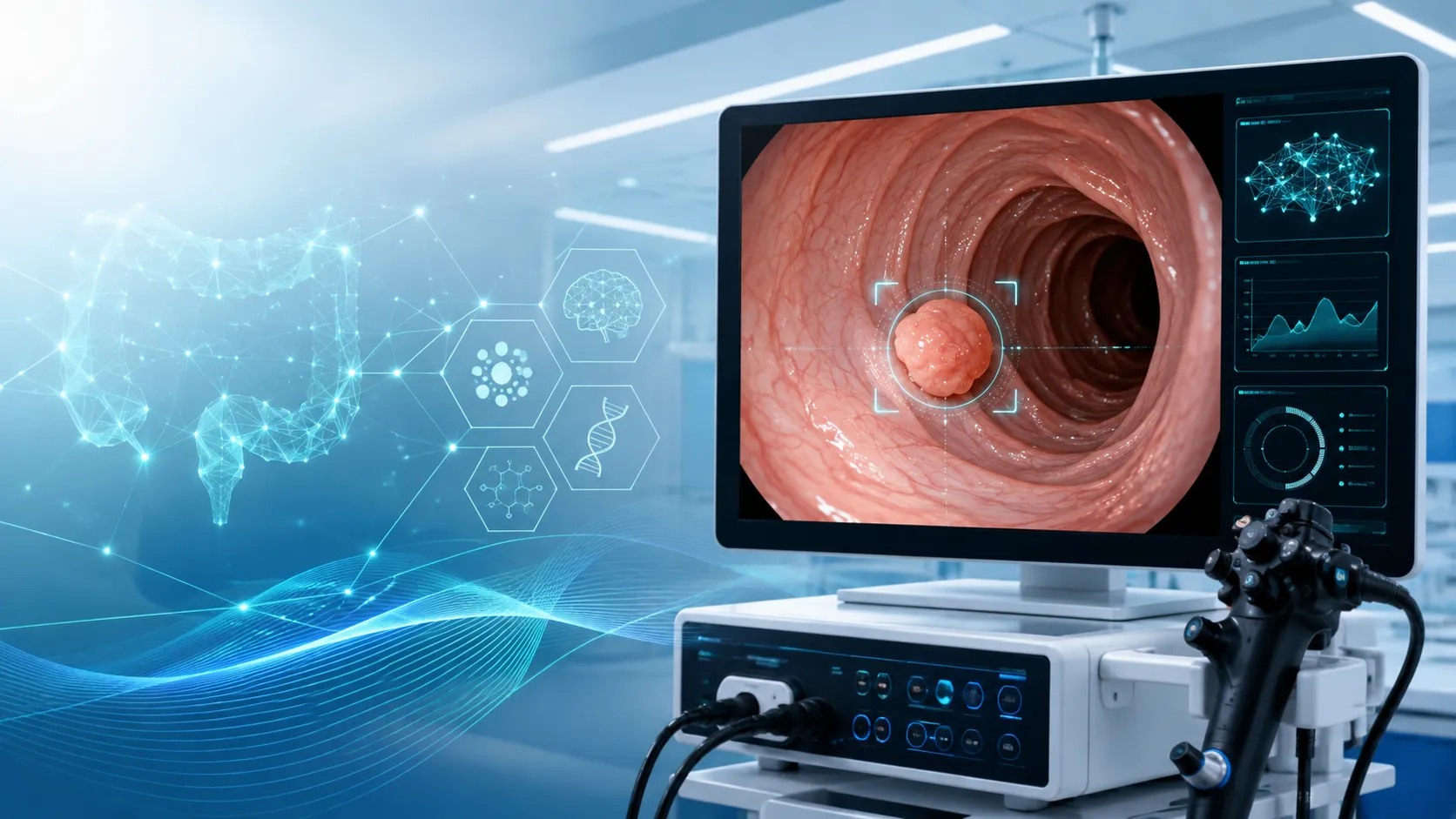
Gastrointestinal endoscopy is one of the most important diagnostic and therapeutic tools in gastrointestinal diseases. In recent years, with significant technological advances, this method has transformed from a simple observation tool into an advanced system for early diagnosis, therapeutic decision-making, and complex interventions.
Among emerging technologies, Artificial Intelligence has found a special place in the field of endoscopy as one of the most transformative achievements in modern medicine. Combining the ability to quickly analyze data by intelligent algorithms with the experience and clinical judgment of the physician has created a new path to increase the accuracy of diagnosis and improve the quality of patient care.
The role of Artificial Intelligence in increasing the accuracy of diagnosis of gastrointestinal lesions
One of the most important applications of artificial intelligence in endoscopy is to help identify lesions that may remain hidden from the physician’s view during routine examination. AI-based systems using deep learning algorithms are able to analyze endoscopic images in real time and identify abnormal patterns in the gastrointestinal mucosa.
In colonoscopy, one of the most important applications of this technology is the automatic detection of colorectal polyps. Colon polyps are sometimes very small, flat, or have an unusual appearance, and their detection requires high accuracy and experience. AI-based diagnostic assistance systems can notify the doctor of suspicious lesions by continuously reviewing the image and reduce the chance of missing polyps.
Artificial Intelligence and Improving Colonoscopy Quality Indicators
The quality of colonoscopy is one of the determining factors in the success of colon cancer screening programs. Indicators such as adenoma detection rate (ADR), mucosal quality, and completeness of colon examination play an important role in evaluating the performance of a colonoscopy.
Studies have shown that the use of computer-aided detection (CADe) systems can increase the detection rate of adenomas. This is of great importance because increasing the detection rate of precancerous lesions can help reduce the incidence of colorectal cancer in the future.
Artificial intelligence in this field does not replace the doctor, but acts as an auxiliary tool to reduce the possibility of human error and increase the quality of decision-making.
More accurate diagnosis of the type and nature of lesions
Another important area of application of artificial intelligence is the detection of histological characteristics of lesions. Some advanced systems are able to estimate the likelihood of a lesion being benign or precancerous by analyzing image features.
This capability can be very valuable in treatment decisions. For example, in some cases, a physician can make a more accurate decision about the need for lesion removal, the type of intervention, or the patient’s follow-up plan based on information obtained from smart imaging.
Technologies such as magnification imaging, Narrow Band Imaging (NBI), and advanced imaging systems, along with artificial intelligence, have paved the way for a move towards more precise medicine.
The role of artificial intelligence in training and transfer of experience
One of the important challenges in the field of endoscopy is the difference in the level of experience among specialists. Acquiring skills in detecting subtle lesions and performing complex procedures requires years of experience and continuous training.
Artificial intelligence can also be used as a training tool. Intelligent systems are able to analyze multiple examples of endoscopic images and help train young doctors. This can reduce the educational gap between different centers and increase skill standards.
Limitations and challenges of using artificial intelligence
Despite significant benefits, the widespread use of artificial intelligence in endoscopy is also accompanied by challenges. The quality of the performance of algorithms depends on the quality of the data used to train them. If the training data is not sufficiently diverse, the performance of the system in real conditions may decrease.
Also, issues related to the security of patient information, privacy, equipment costs, and the need for user training are among the issues that must be considered in the development of this technology.
On the other hand, the final decision-making will still rest with the physician. AI should be used as a supportive tool alongside expert knowledge and experience, not a replacement for medical judgment.
The Future of Endoscopy with Artificial Intelligence and Precision Medicine
The future of gastrointestinal endoscopy will undoubtedly be influenced by the development of smart technologies. In the coming years, it is expected that AI systems will play a greater role in predicting disease progression, selecting the best treatment method, and personalizing patient care, in addition to diagnosing lesions.
Combining endoscopic image information with clinical, genetic, and laboratory data can pave the way for Precision Medicine in gastrointestinal diseases; an approach in which treatment and follow-up of each patient are designed based on their specific characteristics.
Summary
Artificial intelligence is one of the most important future technologies in the field of gastrointestinal endoscopy, which can play an important role in improving health services by increasing diagnostic accuracy, improving the quality of colonoscopy, reducing diagnostic errors, and helping to train physicians.
However, the success of this technology depends on its correct use, appropriate training of physicians, and maintaining the central role of the specialist in the medical decision-making process. The future of endoscopy will be a combination of human experience and the analytical power of technology, a combination that could revolutionize the diagnosis and treatment of digestive diseases.

Share your opinion